The shrine under the show
Kanda Myojin: history and manners
A short history of Kanda Myojin, its three deities and its festival, plus the manners the shrine asks of visitors before an evening show on its grounds.
Book the samurai night ↗Quick answer
Kanda Myojin is a Shinto shrine that says it was first built about 1,300 years ago in what is now Otemachi and moved to its present site in 1616. It enshrines Daikoku, Ebisu and Taira no Masakado, and holds the Kanda Matsuri every other year in May. Visitors may enter by any approach, purify their hands, pray first and buy charms afterwards.
A short history
The shrine says it was first built about 1,300 years ago at what is now Otemachi in Chiyoda, and Wikipedia gives the year as 730. It was moved to Kanda in 1603 to make room for the expansion of Edo Castle, and to its present site in 1616. Warriors revered it, and under the Tokugawa it gained a following among ordinary townspeople, who knew it as the guardian of Edo. After the 1923 earthquake the main hall was rebuilt in 1934 in steel-reinforced concrete, and it came through the Second World War air raids with little damage.
Three deities
The shrine enshrines three deities. Daikoku is the god of relationships and marriage, and is also credited with building the land. Ebisu is the god of business prosperity, and Daikoku and Ebisu are both among the Seven Gods of Fortune, which makes the shrine popular with entrepreneurs. The third deity is Taira no Masakado, the rebel warrior, who is honoured as a protector against disaster. Charms for relationships and for business prosperity are sold side by side.
The buildings
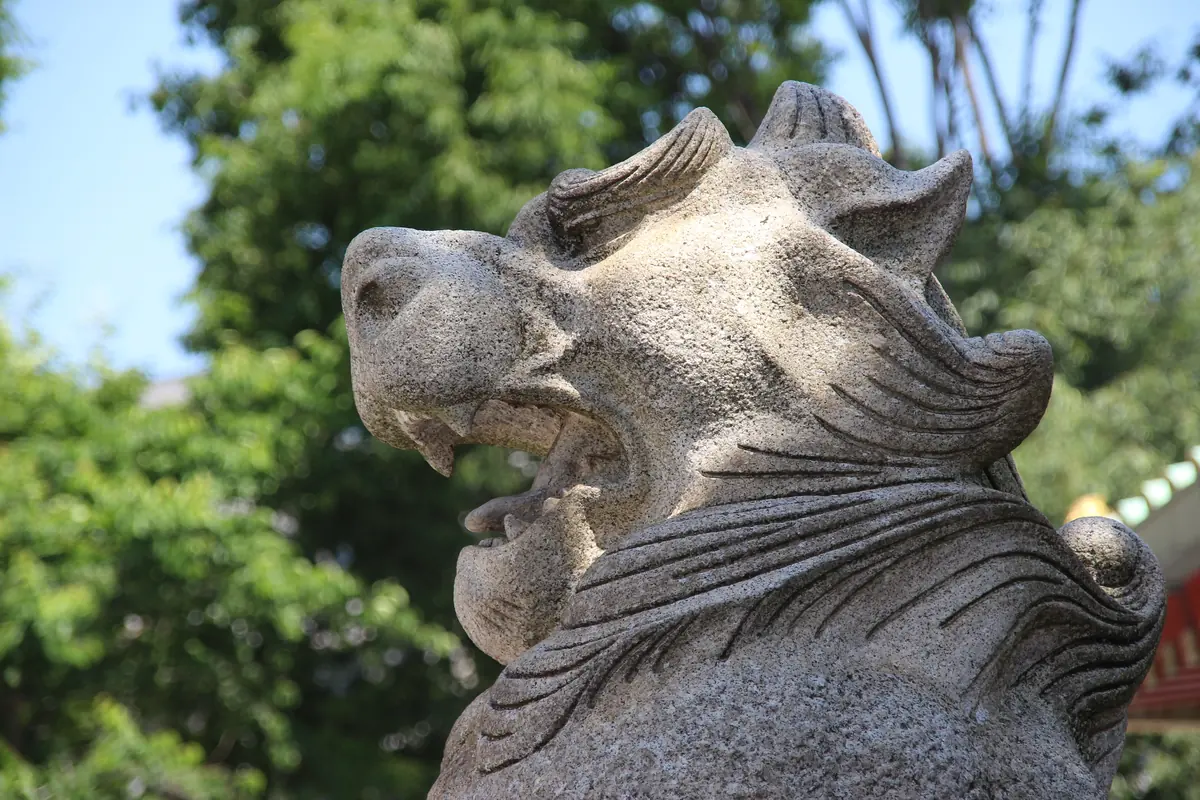
The main hall is painted vermilion all over, in the gongen style, with gold and a lacquered interior. The shrine's grounds map notes the unusual pair of guardian lions that face forward, built with the hall after the earthquake. Elsewhere on the grounds are the two-storey Zuishin-mon gate, statues of Ebisu and Daikoku, and the EDOCCO cultural centre, which opened in 2018 and holds the basement where the samurai show is staged.
The Kanda Matsuri
The Kanda Matsuri is held every other year in May, and the shrine counts it among the three most renowned festivals in Japan. According to Wikipedia it was started in 1600 by Tokugawa Ieyasu, to celebrate his victory at Sekigahara, and its decorated portable shrines, the mikoshi, were once paraded into Edo Castle so the shogun could watch. Today it fills the streets of the neighbourhoods around the shrine. Dates are announced by the shrine, so check them before you plan a visit around the festival.
How to visit with respect
The shrine's own guidance is relaxed but specific. Purify your hands and mouth at the water basin before you pray: wash your left hand with the ladle in your right, then your right hand, rinse your mouth with water from your left palm, and rinse your left hand once more. Pray first, and buy charms or talismans afterwards. Bowing at the gates is not required, and visitors may enter or leave by any approach. If you hang an ema, write a wish and a name, and avoid personal details or insults, because other visitors can read it.
The show and the shrine
The samurai show is a separate production, run by its own company in the basement of the cultural centre on the shrine's grounds. The shrine's website lists it as a show restaurant, and the show's story draws on Masakado, one of the shrine's deities. Treat the approach as you would any shrine path, and keep the performance's photo and film rules in mind once you are inside. After the performance the cast poses for commemorative photos, which the show's own site welcomes.
Read next: Samurai night show Tokyo: what to book
Frequently asked questions
How old is Kanda Myojin?
The shrine says it was first built about 1,300 years ago at what is now Otemachi. Wikipedia gives 730. It has stood at its present site since 1616.
Do I have to bow at the gate?
No. The shrine says it is not required and is left to each visitor's feelings and circumstances. Visitors may also enter and leave by any approach.
Can I visit the shrine on its own?
Yes. The grounds are open to anyone. The samurai show is a separate ticketed production in the basement of the cultural centre.
Sources